
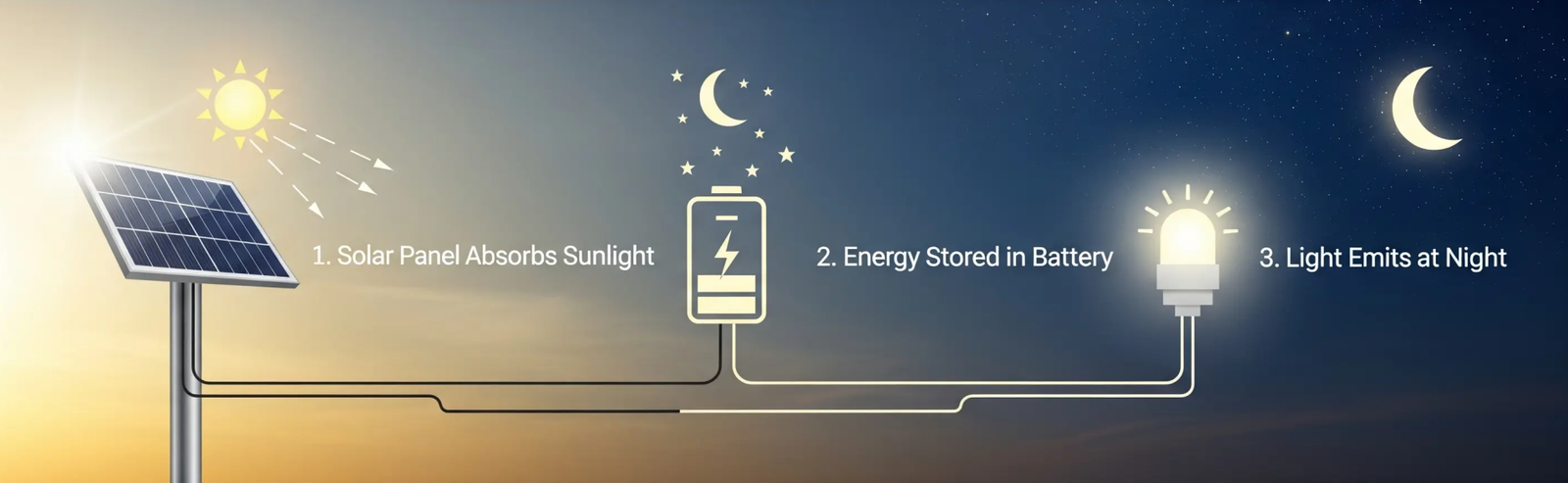
Solar street lights operate using photovoltaic (PV) technology, which converts sunlight into electricity during the day and stores that energy in batteries for night-time lighting.
During daylight hours, the solar panel absorbs sunlight and generates electrical power. This energy is stored in a rechargeable battery through a controller. When night falls, the controller automatically activates the LED light, providing illumination for roads and public spaces.
Because solar street lights operate independently from the electrical grid, they are widely used in remote areas, infrastructure projects, and locations where grid installation is expensive or impractical.
A typical solar street lighting system consists of several important components that work together to ensure stable operation.
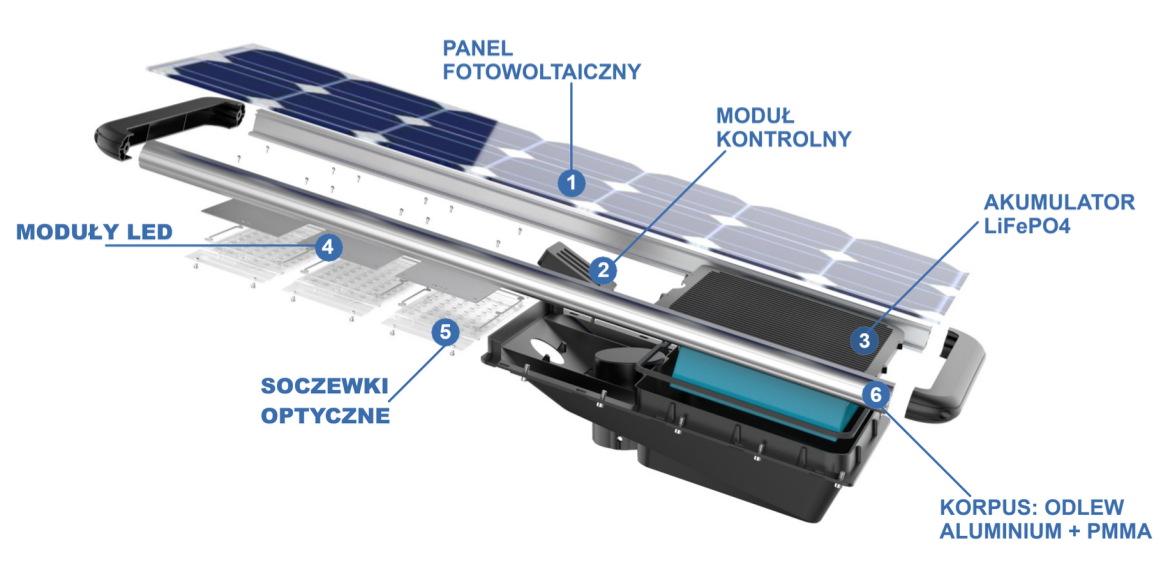
Solar Panel
The solar panel converts sunlight into electricity. High-efficiency monocrystalline panels are commonly used to maximize energy generation even under limited sunlight conditions.
Battery
The battery stores energy collected during the day and supplies power to the light at night. Lithium batteries are widely used due to their long lifespan, high energy density, and better performance in varying temperatures.
LED Light Source
LED technology provides bright illumination while consuming very little energy. Compared with traditional lamps, LED street lights offer longer lifespans and higher luminous efficiency.
Intelligent Controller
The controller manages charging and discharging processes and controls the lighting schedule. Modern controllers can automatically adjust brightness levels depending on battery capacity and solar conditions.
Pole and Mounting Structure
The pole supports the lighting fixture and ensures stability in outdoor environments. Proper structural design is important for wind resistance and long-term durability.
Solar street lighting systems offer several advantages compared with traditional grid-powered street lights.
Eco-Friendly and Energy Efficient
Solar street lights rely entirely on renewable solar energy, reducing dependence on fossil fuels and lowering carbon emissions. Once installed, they generate electricity from sunlight without additional energy costs.
Independent Operation
Because they are not connected to the electrical grid, solar street lights can operate even during power outages. This makes them particularly suitable for rural roads, remote locations, and infrastructure projects.
Lower Long-Term Operating Costs
Although the initial investment may be higher than traditional lighting, solar street lights eliminate electricity bills and reduce wiring and trenching costs. Over the long term, the operational savings can be significant.
Intelligent Lighting Control
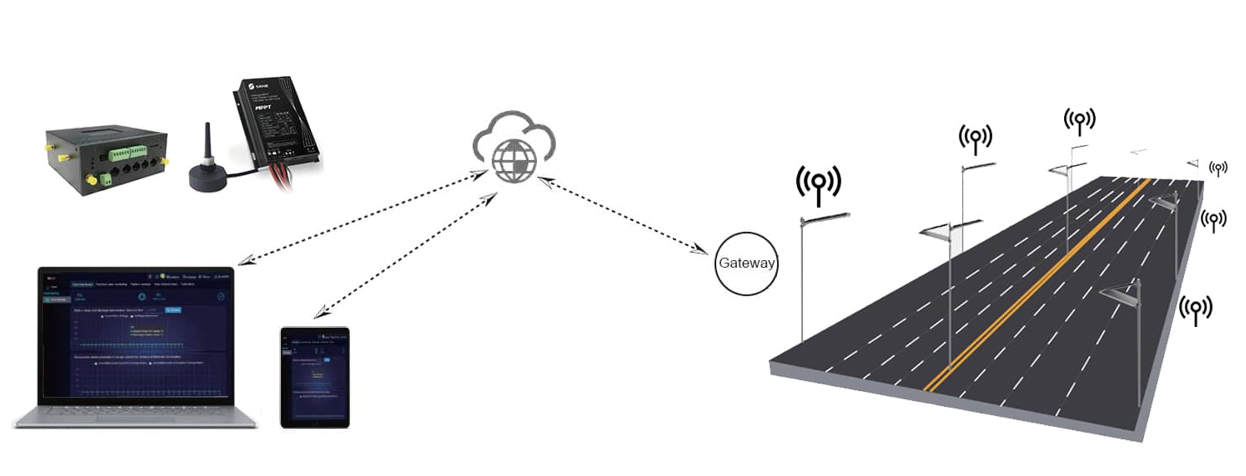
Many modern solar street lights include smart control functions such as:
Automatic dusk-to-dawn operation
Motion sensor dimming
Programmable lighting schedules
These features help optimize energy use and extend battery life.
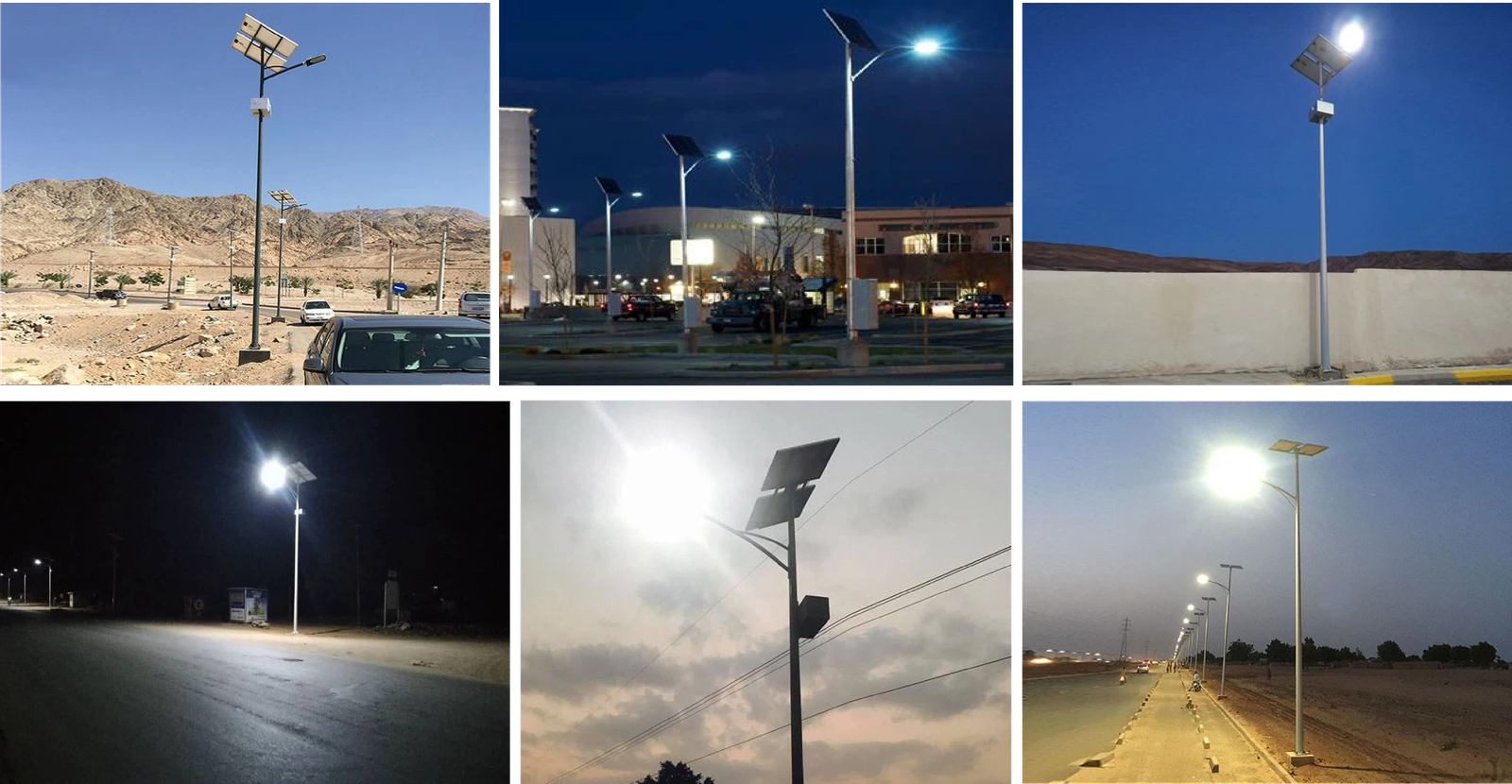
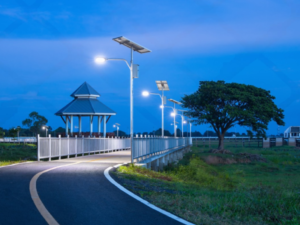
Solar street lighting is widely used in many types of outdoor environments due to its flexibility and simple installation.
Common applications include:
Urban and Municipal Roads
Cities use solar street lights in certain road sections where extending grid infrastructure is expensive or unnecessary.
Rural Roads and Villages
Solar street lights are particularly valuable in rural areas where grid access may be limited or unreliable.
Parks and Public Spaces
Public parks, pathways, and recreational areas often use solar lighting to improve safety while maintaining sustainable infrastructure.
Parking Areas and Commercial Zones
Solar street lights can illuminate parking lots and industrial zones without increasing electricity consumption.
Infrastructure and Development Projects
Solar street lighting is commonly adopted in infrastructure development projects, new residential areas, and remote transportation routes.
Selecting the right solar street lighting system requires careful evaluation of several factors to ensure reliable performance.
Solar Panel Efficiency
Higher conversion efficiency allows the system to generate more electricity during daylight hours, especially in locations with limited sunlight.
Battery Capacity and Backup Days
Battery capacity determines how long the system can operate without sunlight. Projects in cloudy or rainy regions often require more backup days.
Lighting Brightness and Optical Design
Proper brightness and light distribution are essential for road safety. The LED power and optical design should match the road width, pole height, and installation spacing.
Environmental Protection
Outdoor lighting equipment should have appropriate IP and IK ratings to ensure resistance to rain, dust, and physical impact.
Smart Energy Management
Advanced controllers help regulate brightness levels and manage battery discharge, improving long-term system reliability.
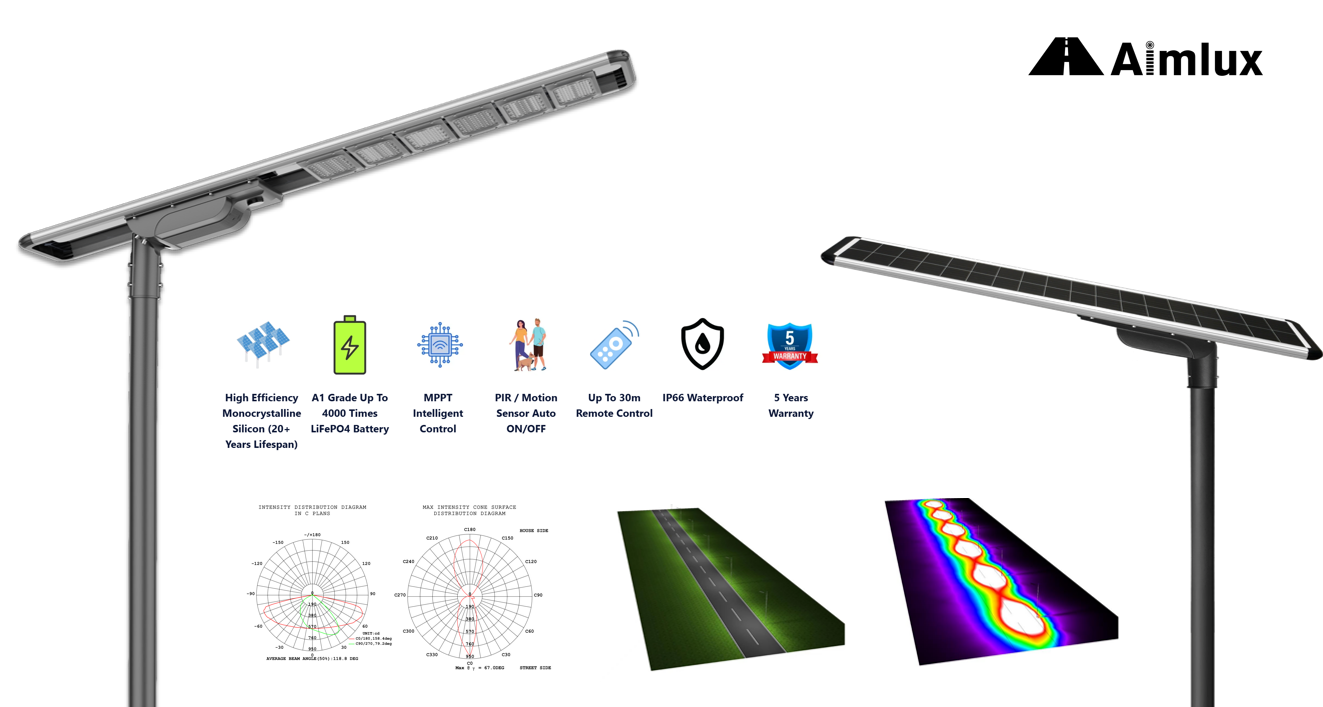
In many road and public lighting projects, integrated solar street lights are preferred because of their compact structure and simplified installation process.
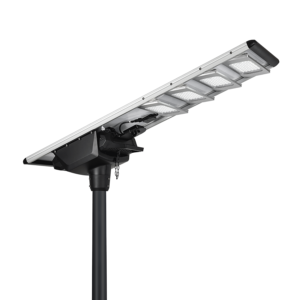
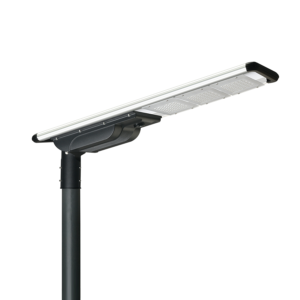
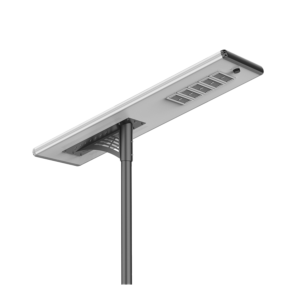
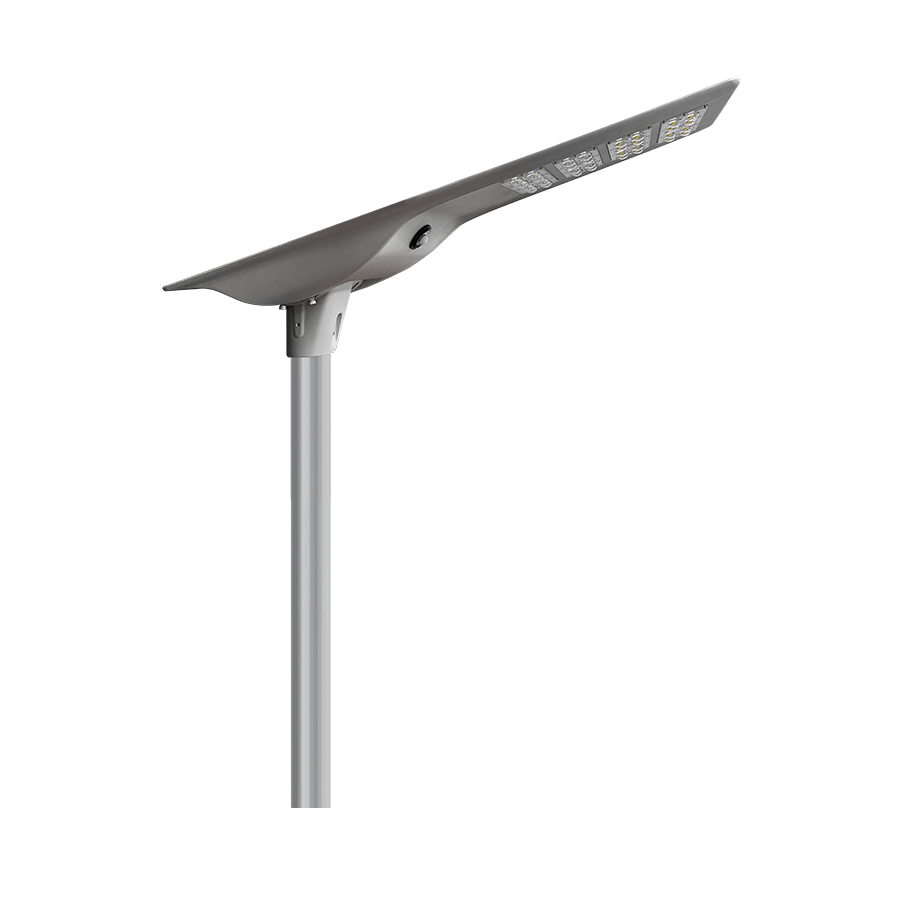
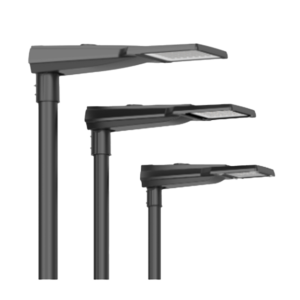
One example is the Aimlux Solar Street Light AL-SSB3, designed for both urban and rural lighting applications.
This model combines efficient solar technology with durable construction, making it suitable for roads, parks, communities, and infrastructure projects.
Key Features
High-Efficiency Monocrystalline Solar Panel
Maximizes solar energy absorption for reliable night-time illumination.
Long-Life Lithium Battery
Provides stable performance and longer operating cycles even during cloudy weather conditions.
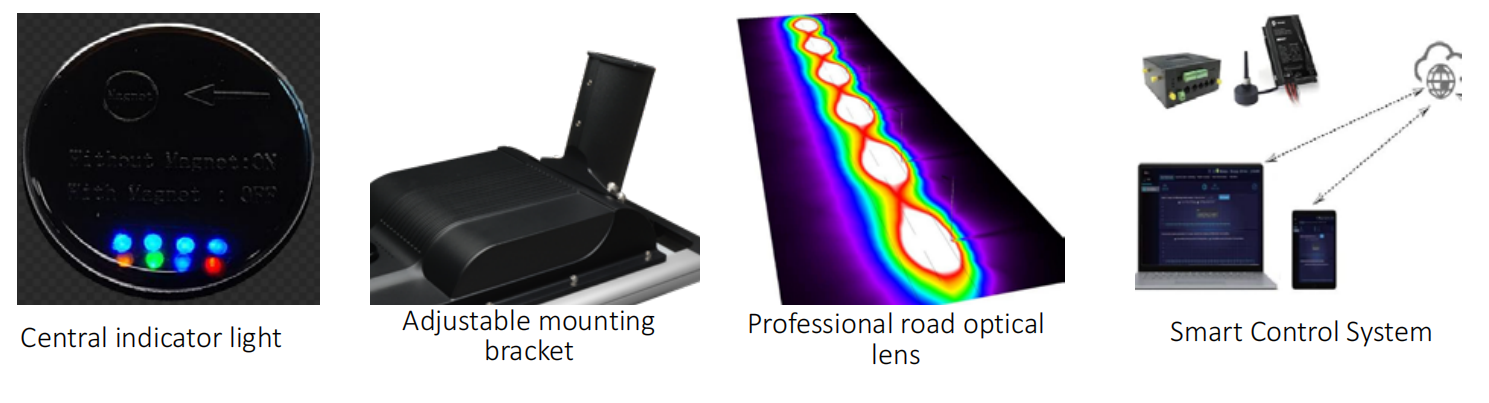
Intelligent Control System
Automatically manages brightness and operating schedules to optimize energy consumption.
Weather-Resistant Design
With IP65 protection, the system is designed to withstand outdoor environmental conditions.
Easy Installation
Integrated design reduces installation complexity and minimizes project construction time.




Solar Street Lights: Benefits, Applications and How to Choose the Right System
Solar street lights are becoming an increasingly popular lighting solution for urban and rural infrastructure projects. This guide explains how solar street lights work, their main benefits, common applications, and the key factors to consider when selecting a reliable solar lighting system.

Is Solar Street Lighting Reliable for Road Projects? A Practical Engineering Guide
Solar street lighting is increasingly used in road projects, but reliability depends on proper system design and project conditions. This article explains the key factors that determine long-term performance, including solar system configuration, battery strategy, lighting design, and real road parameters.

How to Design a Reliable Solar Street Lighting System?
Learn the key factors that determine solar street lighting performance, including road width, pole height, spacing, climate conditions, and backup days. A practical guide for planning reliable solar street lighting projects.

OEM/ODM/SKD
Why Choose Aimlux? OEM/ODM/SKD Aimlux was founded by a diverse team comprising experienced and energetic members with a cumulative industry experience that caters well to
